
How to Check Criminal History in Normal
Choose the custodian by the question. Normal Police holds incident narratives and evidence. The McLean County Sheriff holds booking material, while the Circuit Clerk keeps charges and dispositions. Illinois State Police is the statewide layer.
- Identify whether NPD or Illinois State University Police wrote the report.
- Use Normal's online FOIA form for the exact police record.
- Search an OV matter under Traffic and Criminal Cases.
- Check Sheriff booking and Circuit Clerk court records.
- Use ISP Access and Review for your own statewide file.
Normal's Five-Day FOIA Route
The Town Clerk receives Normal public-record requests through its online FOIA form. A noncommercial request ordinarily receives a response within five working days. Commercial requests have a 21-working-day timetable. The form asks for contact details, a precise description, a report number when available, and the requested copy or inspection format.
| Paper copies | First 50 pages free, then $0.10 per page |
|---|---|
| Accident report | $3 |
| DVD or video disc | $2 |
The official form is shown in this successful manifest capture.
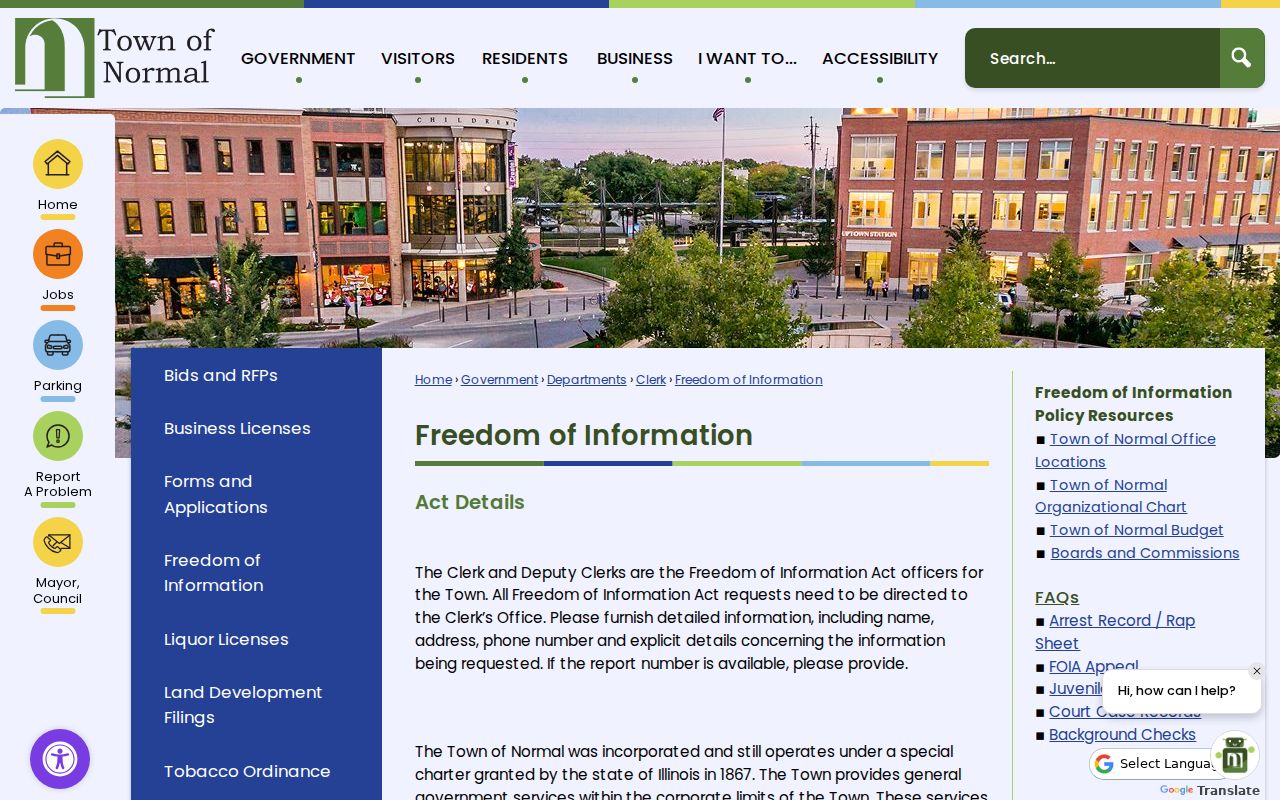
The form creates a request, not a new statewide background-check product.
The Normal Police Department
Normal Police is at 100 E. Phoenix Ave., Normal, IL 61761. The department number is 309-454-9535, and Police Records is 309-454-9528. The Town routes reports through the Clerk's online Public Records Request portal rather than a public incident-name search.
The victim information page confirms that route. Provide the report number if known and name every component sought. Juvenile reports involving a juvenile who was arrested or investigated require an order from the presiding juvenile judge.
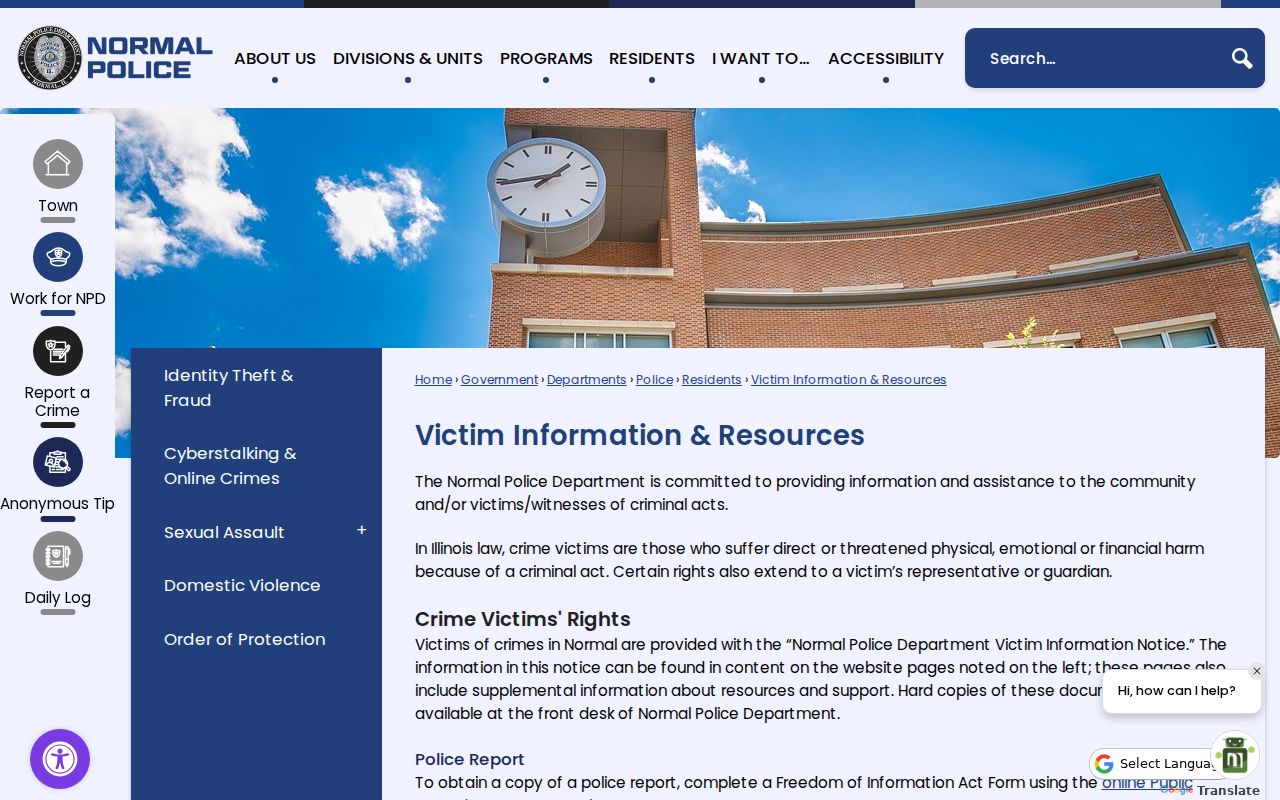
The city guidance separates a request for an existing report from a statewide criminal-history inquiry.
Why Normal Bookings Go Countywide
Normal's own FAQ states that every McLean County agency uses the consolidated booking center. NPD therefore holds the investigative report, the Sheriff holds arrest and booking material, and the Circuit Clerk holds a filed charge and disposition. Illinois State University Police creates a separate report stream inside Normal.
This routing is unusually clear and prevents a common mistake. A requester should not ask NPD for a county jail roster or assume an ISU incident belongs to the Town.
Arrests and Bookings in Normal
Normal has no separate city jail roster. City arrestees enter McLean County's consolidated booking system. Normal keeps the report; the Sheriff keeps booking and custody data. Recent activity may appear in the official Sheriff Daily Blotter.
Use both sources, then check the clerk for the outcome. The McLean County arrest history explains county booking channels and their limits.
Normal Police Complaint Outcomes
Normal publishes citizen-complaint outcomes. In 2025 the Town listed ten complaints: five proper conduct, two insufficient evidence, two unfounded, and one improper conduct. These figures describe allegations about police conduct, not arrests, crimes, or criminal histories.
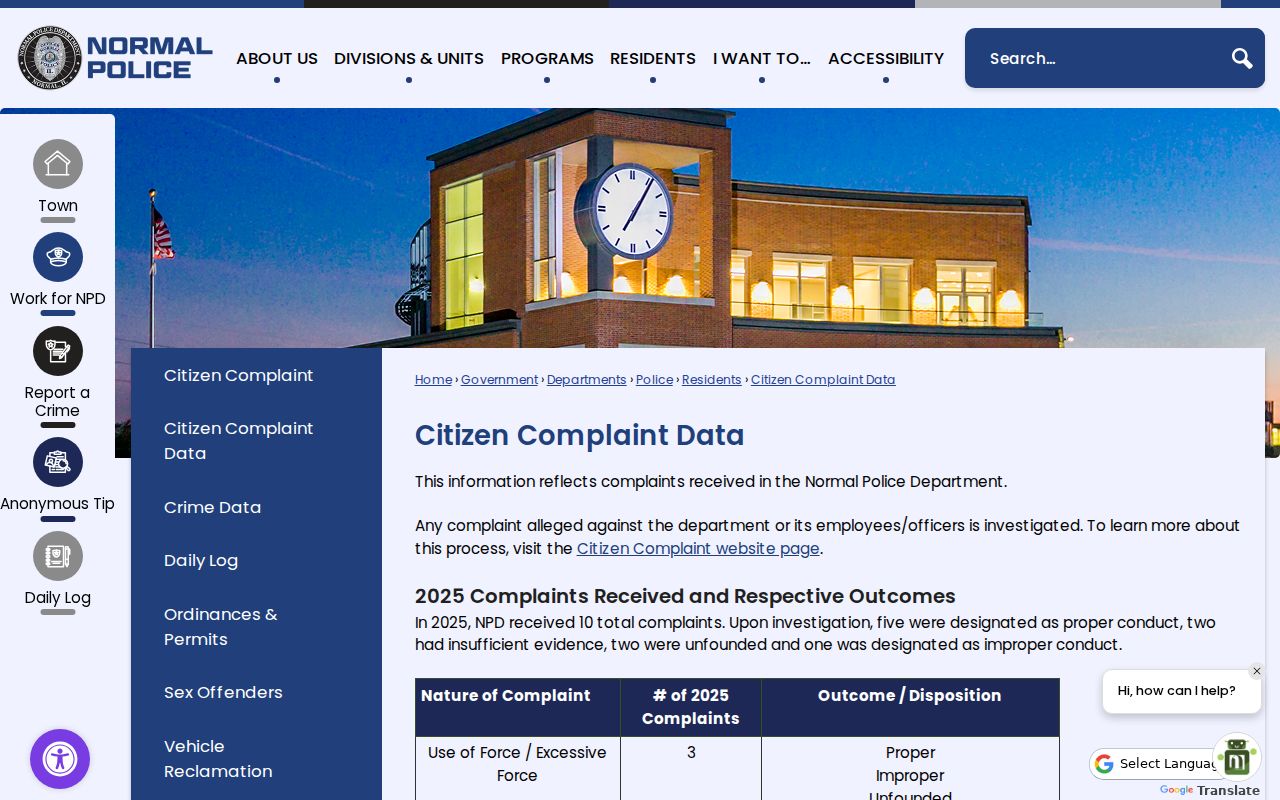
The capture is useful oversight context, but it cannot answer whether a named person was arrested or charged.
Normal Municipal Court Records
Normal's Legal Department handles ordinance violations. The Town says an ordinance violation is not a criminal charge and a conviction does not create a criminal record. A ticket may be paid before court or contested. Most fines range from $25 to $500, with $100 in court assessments after a guilty plea or verdict.
| Court Route | McLean County Circuit Court and Normal Legal Department |
|---|---|
| Case Types | Criminal, traffic, and OV ordinance matters |
| Lookup | Traffic and Criminal Cases by name or case number |
| OV clue | Ordinance case numbers contain OV |
| Missing result | Call Legal at 309-454-9507 |
Search Normal OV Case Numbers
Use the Circuit Clerk's Traffic and Criminal Cases heading. Search by name or, preferably, the OV case number. If the case is absent, call Normal Legal at 309-454-9507 rather than deciding that the ticket vanished. The court date is printed on the ticket.
The Town's ordinance FAQ explains the search and fallback.
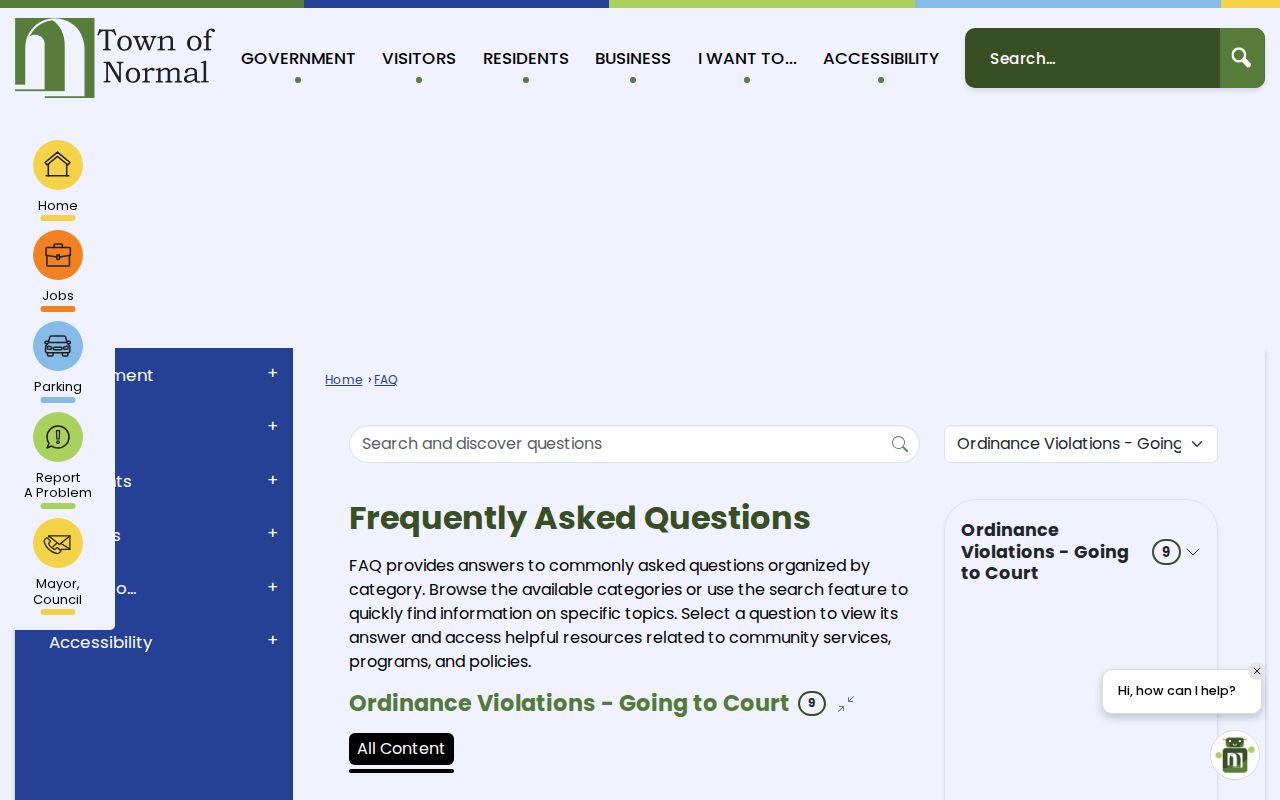
The capture shows why an OV result belongs in a municipal-rule context, not a criminal-conviction claim.
Where Normal Records End Up
Normal Police creates the first record. The Sheriff adds booking data if custody follows. Prosecutors decide whether to file, and the Circuit Clerk records judicial events. Qualifying dispositions then reach ISP.
Record flow: Normal PD › McLean County Courts › Illinois State Police Bureau of Identification
Recent events may not align at once. Search each layer for its own purpose. For an older mismatch, fingerprint-based ISP Access and Review is safer than a name-only match and provides a challenge process.
Timing explains many apparent gaps in Normal criminal records. NPD can finish an incident report before a custody record is indexed. The State's Attorney can decline or alter charges, so an arrest may never produce the expected Circuit Court case. A disposition can also take time to reach the ISP repository. Compare identifiers, dates, and charge language rather than relying on a name alone.
For self-review, a fingerprint-based ISP Access and Review request gives the strongest identity match. A licensed Live Scan vendor captures the prints for the ISP purpose, and ISP sends the result by mail. The state charges no Access and Review or Record Challenge fee, though a vendor may charge for capture and transmission. The response includes a challenge path when an item is wrong or incomplete.
Normal and ISU Police Records
Normal contains Illinois State University, but Town and campus records are not interchangeable. Check the report heading, badge agency, citation, or dispatch details before filing. NPD records go through Normal's clerk route. ISU Police records remain with the university custodian.
The distinction is local and practical. A street within Normal can produce a Town, university, Sheriff, or state record depending on who responded.
Normal's Separate Records System
Normal operates under a special Illinois charter granted in 1867. It adjoins Bloomington, but the shared Twin Cities identity does not merge police departments, clerks, legal offices, or public-record channels. A report created by Normal remains a Town record even when the later booking and court file move to McLean County.
That boundary is especially important in Uptown and near Illinois State University. Start with the agency named on the report or ticket. Then follow custody to the Sheriff and filed cases to the Circuit Clerk. This adds a seventh research-driven section, preserving the required city-specific majority over the six anchor sections.
Public Access Rules for Normal Records
Illinois FOIA presumes access but permits exemptions for active investigations, privacy, juveniles, and confidential sources. Court records follow clerk and judicial access rules. State conviction dissemination follows a separate statute.
Key Statutes:
Illinois FOIA, 5 ILCS 140 - governs city requests and exemptions.
Criminal Identification Act, 20 ILCS 2630 - governs identification reporting and record relief.
UCIA, 20 ILCS 2635 - controls ISP conviction-information dissemination.
Normal distinguishes an existing Town record from a criminal-history product. FOIA can obtain a police report that already exists, subject to exemptions and redactions. It does not require NPD to create a new background check. Questions about city or statewide criminal-history requests go to Police Records and the official ISP channel.
Inspection of nonexempt Normal records is free. Ask for electronic production when it fits the record and list each desired component. A focused request can reduce clarification delays. If Normal withholds material, the response should identify the exemption. Court access remains a separate clerk process, and juvenile police reports carry the judge-order restriction described by the Town.